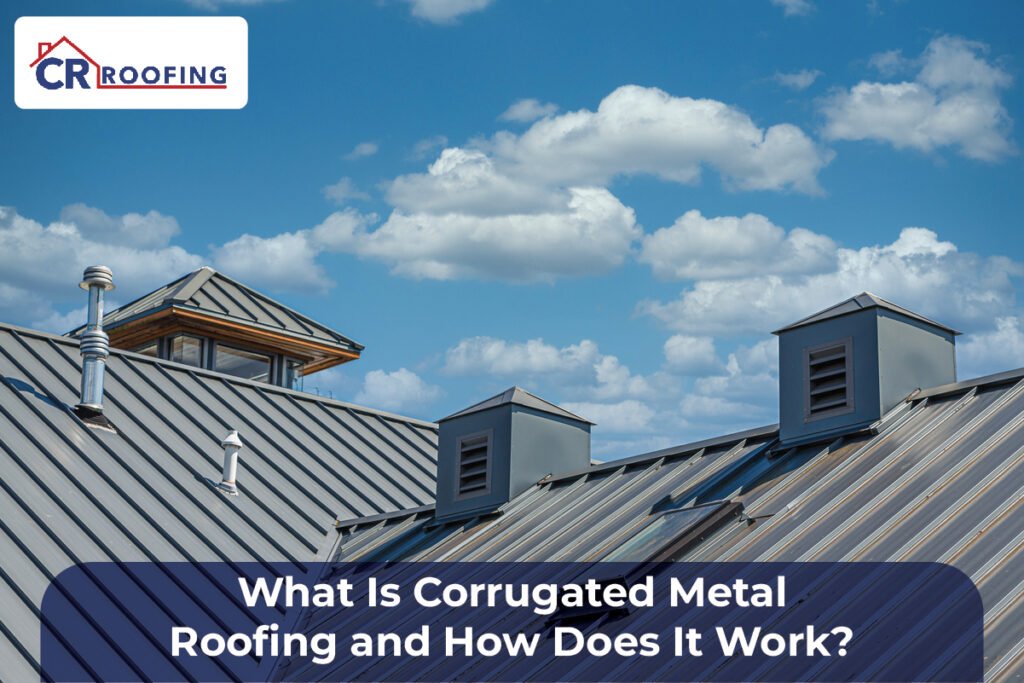
In the world of durable, long-lasting roofing solutions, corrugated metal roofing has emerged as a top choice for both residential and commercial properties. Known for its distinctive wavy appearance, strength, and weather resistance, corrugated metal roofing combines practicality with a classic industrial aesthetic. At C&R Roofing, we often help homeowners and business owners understand how this roofing system works and why it’s becoming increasingly popular.
In this guide, we’ll explore what corrugated metal roofing is, its materials, how it functions, its benefits, and why it might be the perfect fit for your property.
Understanding Corrugated Metal Roofing
Corrugated metal roofing consists of metal sheets that are rolled or pressed into a wavy, ridged pattern. This design, often referred to as “ribbed,” adds structural strength, allowing the panels to span larger distances without sagging. The corrugated pattern is not just for aesthetics—it also enhances water runoff, reduces roof load, and improves overall durability.
The system works by overlapping metal sheets and fastening them to the roof structure. The ridges and grooves ensure rainwater flows efficiently to gutters or edges, preventing leaks and water pooling.
Materials Used in Corrugated Metal Roofing
Several materials can be used to manufacture corrugated panels, each offering unique benefits:
- Corrugated steel roofing – Strong and durable, steel is often coated with zinc or other protective layers to prevent rust and corrosion.
- Galvanized corrugated roof panels – Steel panels coated with a protective zinc layer for enhanced longevity, corrosion resistance, and suitability in wet climates.
- Aluminum corrugated roofing – Lightweight, rust-resistant, and ideal for coastal regions or areas with high humidity.
- Zinc corrugated sheets – Long-lasting, naturally resistant to corrosion, and visually appealing for premium architectural designs.
- Coated corrugated metal – Panels with protective coatings that improve weather resistance, color retention, and energy efficiency.
- Ribbed metal roofing panels – Another term for corrugated panels, emphasizing the ridged design for structural strength.
- Metal sheet roofing – Broad term encompassing corrugated panels, standing seam panels, and other metal roofing systems.
How Corrugated Metal Roofing Works
The efficiency of corrugated metal roofing comes from its unique design and installation process:
1. Water Drainage
The wavy or ribbed pattern channels rainwater and snow efficiently to the roof edges. This prevents pooling, leaks, and water damage, which are common issues in flat or poorly designed roofs.
2. Structural Strength
Corrugated panels are naturally stronger than flat metal sheets of the same thickness. The ridges distribute weight and withstand heavy loads, making corrugated steel roofing ideal for industrial and commercial buildings.
3. Overlapping Installation
Sheets are overlapped and fastened with screws or clips to a supporting frame. The overlaps and fasteners ensure a secure fit and reduce the likelihood of water infiltration.
4. Expansion and Contraction
Metal expands and contracts with temperature changes. The ribbed design allows for slight movement, reducing stress on fasteners and minimizing warping over time.
5. Compatibility with Roof Types
While commonly used on sloped roofs, corrugated metal roofing can also be adapted for low-slope applications with proper underlayment and sealing techniques.
Benefits of Corrugated Metal Roofing
1. Longevity
Corrugated metal roofs can last 40–70 years depending on the material and maintenance. Galvanized and coated panels are particularly long-lasting.
2. Durability
These roofs are resistant to hail, wind, fire, and impact. Aluminum corrugated roofing and zinc panels provide additional corrosion resistance, ensuring performance even in challenging climates.
3. Low Maintenance
Once installed, corrugated metal roofing requires minimal upkeep. Occasional cleaning and inspection of fasteners are generally sufficient to maintain performance.
4. Energy Efficiency
Coated corrugated metal panels reflect sunlight, reducing heat absorption and lowering cooling costs. This makes them an environmentally friendly option for energy-conscious homeowners.
5. Aesthetic Versatility
Available in various metals, colors, and finishes, corrugated roofing fits both industrial and modern residential styles. Zinc corrugated sheets and coated panels can be customized to complement architectural designs.
6. Cost-Effective Over Time
Though installation costs can be higher than asphalt shingles, the longevity, low maintenance, and energy efficiency of corrugated metal roofing make it a smart long-term investment.
Installation Considerations
Proper installation is critical for corrugated metal roofing to perform optimally:
- Ensure proper underlayment to prevent condensation and improve insulation.
- Align panels carefully to maintain consistent overlap and prevent water infiltration.
- Use corrosion-resistant fasteners, especially in coastal or humid areas.
- Trim and seal edges properly to enhance durability and prevent wind uplift.
Professional installation, like what C&R Roofing provides, ensures your corrugated metal roof meets these standards and delivers maximum performance.
Common Uses of Corrugated Metal Roofing
- Residential homes – Adds a modern or rustic aesthetic while offering durability.
- Commercial buildings – Ideal for warehouses, factories, and large-span structures.
- Agricultural structures – Barns, sheds, and storage facilities benefit from lightweight, strong panels.
- Industrial applications – Factories, workshops, and garages often use galvanized corrugated roof panels for long-term protection.
Read More: Are Metal Roofs Really Built to Last?
FAQs About Corrugated Metal Roofing
1. How long does corrugated metal roofing last?
Depending on the material, it can last 40–70 years, with coated and zinc panels often reaching the upper range.
2. Is corrugated metal roofing noisy during rain?
Metal roofs can produce some noise, but proper insulation and underlayment significantly reduce sound.
3. Can corrugated metal roofing be installed over an existing roof?
Yes, with proper evaluation and underlayment, corrugated panels can often be installed over existing roofing.
4. What maintenance does corrugated metal roofing require?
Minimal maintenance is needed—periodic cleaning, fastener checks, and inspections for damage are usually sufficient.
5. Which material is best for coastal areas?
Aluminum corrugated roofing and galvanized corrugated roof panels resist corrosion and perform well in salty, humid environments.