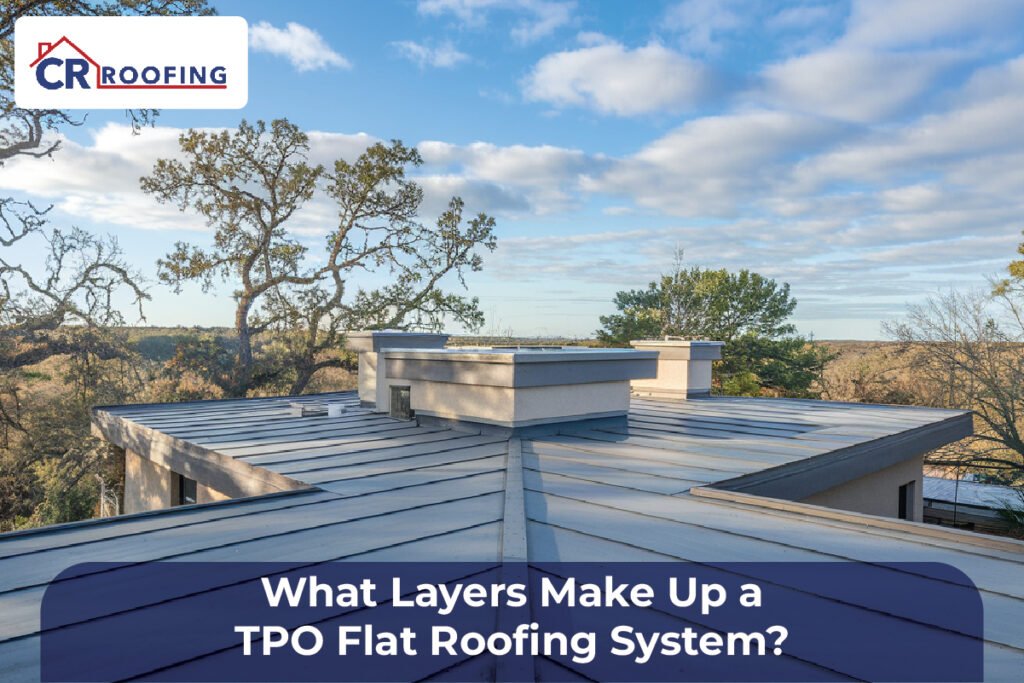
Flat roofs are a common feature in commercial buildings, modern residential properties, and industrial structures. Among the many flat roofing options, TPO flat roofing has gained popularity for its durability, energy efficiency, and cost-effectiveness. At C&R Roofing, we often guide property owners through the components of a TPO system, helping them understand why this roofing solution is both practical and long-lasting.
In this guide, we’ll break down the layers that make up a TPO flat roofing system, explain how they work together, and explore the benefits of choosing TPO for your flat roof.
Understanding TPO Flat Roofing
TPO flat roofing stands for thermoplastic polyolefin roofing, a single-ply membrane system widely used for low-slope or flat roofs. Unlike traditional built-up roofing, TPO offers a lightweight, flexible, and energy-efficient solution that resists UV radiation, ozone, and chemical exposure.
Also referred to as TPO membrane roofing or synthetic flat roof membrane, it’s commonly installed in large commercial buildings, warehouses, and modern homes with flat or low-pitched roofs. The system’s layered construction ensures waterproofing, insulation, and durability.
Key Layers of a TPO Flat Roofing System
A standard TPO flat roofing system consists of multiple layers, each serving a distinct purpose:
1. Roof Deck
The foundation of any flat roof is the roof deck, which can be made of concrete, wood, or metal. It provides structural support for all other layers. A properly designed deck ensures the roof can bear the weight of insulation, membrane, and other materials while remaining stable in extreme weather conditions.
2. Insulation Layer
Above the deck is the insulation layer, often made of polyisocyanurate (polyiso) boards. This layer provides thermal protection, helping maintain interior temperatures and contributing to energy-efficient TPO roofing. The insulation reduces heating and cooling costs while protecting the roof from thermal expansion and contraction.
3. Vapor Barrier
A vapor barrier is sometimes installed to prevent moisture from penetrating the roof system. This layer is essential in climates with high humidity or significant temperature fluctuations, reducing the risk of mold, rot, or insulation damage.
4. TPO Membrane Layer
The TPO membrane roofing is the primary waterproofing layer. It is a flexible, single-ply sheet made from thermoplastic polyolefin. Key features include:
- UV and heat resistance: Many TPO membranes are white, reflecting sunlight and reducing cooling costs.
- Seam-welded joints: Heat welding ensures a watertight seal, unlike adhesives or mechanical fasteners used in other roofing systems.
- Durability: Resistant to punctures, tears, and chemical exposure, making it ideal for industrial and commercial applications.
5. Reinforcement Layer (Optional)
Some TPO systems include a reinforced TPO roofing layer for added strength. This layer contains polyester or fiberglass reinforcement, improving puncture resistance and increasing the lifespan of the membrane.
6. Ballast or Protective Covering (Optional)
Depending on the system, the TPO membrane may be covered with gravel, pavers, or protective coatings. This layer shields the membrane from foot traffic, mechanical damage, and UV exposure.
7. Flashing and Edge Details
Flashing seals the edges, roof penetrations, and joints. Proper installation ensures the single-ply flat roofing system remains watertight and resistant to wind uplift. TPO flashing is heat-welded to the membrane, creating a continuous waterproof barrier.
Benefits of TPO Flat Roofing
1. Energy Efficiency
White TPO roofing reflects sunlight, reducing heat absorption and cooling costs. It is one of the most energy-efficient roofing options available for flat roofs.
2. Cost-Effective
Compared to other single-ply roofing membranes, TPO is affordable while still providing durability, flexibility, and longevity.
3. Durability and Weather Resistance
TPO membranes resist UV rays, chemicals, and extreme temperatures. Reinforced systems offer additional puncture and tear resistance, ensuring long-term protection.
4. Eco-Friendly
TPO roofing is often 100% recyclable, and its reflective surface reduces energy consumption, making it an environmentally responsible choice.
5. Easy Maintenance and Repair
Single-ply TPO membranes are easy to inspect and repair. Heat-welded seams can be reinforced quickly, and damaged sections of the membrane can often be patched without replacing the entire roof.
Common Applications of TPO Flat Roofing
- Commercial Buildings: Warehouses, offices, and retail spaces often use TPO for its durability and cost-effectiveness.
- Industrial Facilities: Resistant to chemicals and UV exposure, ideal for factories and storage buildings.
- Modern Residential Homes: Energy-efficient and sleek, TPO fits contemporary architecture with flat or low-sloped roofs.
- Municipal Buildings: Schools, hospitals, and government buildings benefit from low-maintenance and long-lasting roofing.
Installation Considerations
Proper installation is crucial for maximizing the lifespan of a TPO flat roofing system:
- Ensure the roof deck is clean, smooth, and structurally sound.
- Use high-quality insulation to improve energy-efficient TPO roofing performance.
- Professional heat-welding of seams is essential for watertight protection.
- Regular inspections help identify punctures, seam failures, or membrane degradation early.
Professional installation, like the services provided by C&R Roofing, ensures the TPO system performs as intended and lasts for decades.
Read More: Complete Guide to TPO Roofing Installation for Flat Roofs
FAQs About TPO Flat Roofing
1. What is TPO flat roofing made of?
TPO is a single-ply membrane made from thermoplastic polyolefin, a flexible, heat-weldable, and durable material.
2. How many layers are in a TPO roofing system?
A typical TPO system includes a roof deck, insulation, vapor barrier (optional), TPO membrane, reinforcement (optional), protective cover (optional), and flashing.
3. Is TPO roofing energy-efficient?
Yes. White TPO roofing reflects sunlight, reduces heat absorption, and lowers cooling costs.
4. How long does a TPO flat roof last?
With proper installation and maintenance, TPO roofs typically last 20–30 years, with reinforced systems offering longer durability.
5. Can TPO roofing be installed on residential homes?
Absolutely. TPO is suitable for single-ply flat roofing in both commercial and modern residential applications.
6. How is TPO roofing maintained?
Routine inspections, seam checks, and cleaning of debris are usually sufficient to maintain performance.